
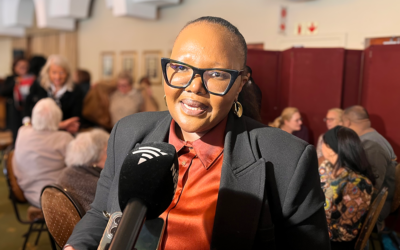
Locked in the past – Schools catalogue freeze risks deepening divide, sabotaging literacy target
CAPE TOWN: South African public schools face relying on a dated textbook catalogue in 2027 as the rollout of new materials remains frozen pending legal advice. With principals calling for urgent guarantees that books will arrive on time, an education expert has warned that a prolonged delay could widen the divide between well-resourced and under-resourced schools – sabotaging an ambitious push to fix foundational literacy and numeracy by 2030.
What it takes for principals to keep the lights on
Delayed state funding is forcing principals into personal debt to keep classrooms running. Facing severe administrative burnout, on top of a R140 billion infrastructure backlog – educators need the government to deliver resources timeously – and then get out of the way.

School funding delays drive principals into personal credit card debt
POLOKWANE: School principals are getting into personal debt to keep schools functioning while provincial education departments delay releasing funds for basic operating costs.

Could the pencil be mightier than the laptop in class
OPINION: Responding to research on the harms of heavy tech use, Sweden is putting down touchscreens and picking up pencils in classrooms. This about-turn from a digitally innovative European country raises an urgent question for South Africa about our relationship with technology in education, and how to ensure digital solutions complement learning.
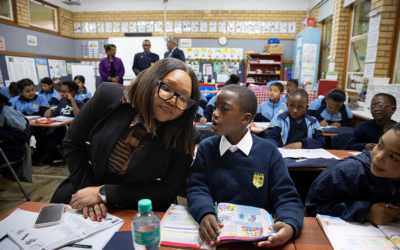
Two years into her tenure, Gwarube faces a R140-billion school infrastructure crisis
CAPE TOWN: South Africa’s school infrastructure is caught in a double squeeze: shifting learner movements are leaving rural classrooms empty while urban demand outstrips space, according to Basic Education Minister Siviwe Gwarube.
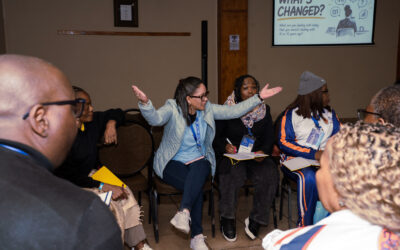
Principal association president issues 5-step appeal to ease burnout pressure
POLOKWANE: About 850 principals gathered in Limpopo to take stock of their challenges, with the president of the SA Principals Association calling on the government to reform systems to free up principals to do their job of leading schools.
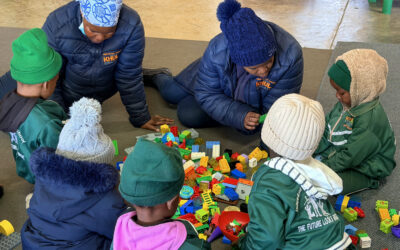
Fixing the Gap: Rural KZN’s fight for Early Education
RORKE’S DRIFT: Over 1.1 million South African children aged three to five are not enrolled in early-year learning, according to the 2024 Thrive by Five Index. In the rural uMzinyathi District of KwaZulu-Natal, Early Childhood Development practitioners and non-profits are working to change that.
Should schools ban cellphones?
OPINION: It is hard to keep up with fast-paced digital developments, and policies are always lagging. How should South African schools approach social media, cellphones, Artificial Intelligence in classrooms, and codes of conduct around communication between learners and teachers? In Finland, a year-long cellphone ban is yielding positive results.
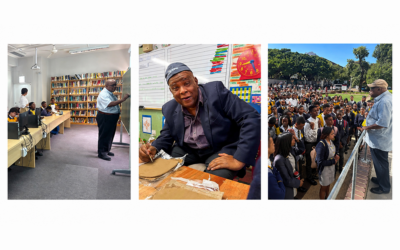
Two years at ‘Cherry High’: Inside Jonathan Jansen’s frontline fight to fix our schools
CAPE TOWN: As a social scientist returning to the classroom, Prof Jonathan Jansen tackles South Africa’s education crisis head-on in Worth the Fight. He exposes how out-of-touch policies sabotage working-class schools, making the case for why real change demands leadership and a community effort.

Primary school teacher Sonwabile Gana is stitching dignity back into the classroom
ATLANTIS: Stitch by stitch, a teacher in Atlantis outside Cape Town is using his self-taught sewing skills to repair learners’ torn uniforms – which in turn builds confidence and participation in class.

Eastern Cape teacher assistants show real impact of stalled mega-jobs project
MAKHANDA: About 1.4 million youth in the country, including the Eastern Cape, have benefitted – in the short-term at least – from a massive youth employment project that has alleviated the daily stresses of teachers in about 23,000 schools since 2020. But now many are back home, trying to build on their experience, while the project’s future is uncertain.
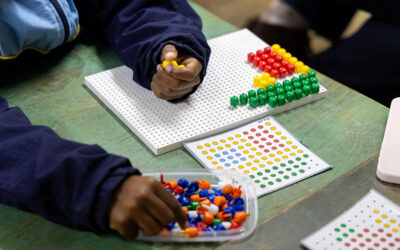
Power to the parents – Don’t waste your School Governing Body vote
JOHANNESBURG: With draft BELA Act regulations now open for public comment and ahead of School Governing Body elections in March next year, parents have been urged to prepare in advance and take their voting power seriously.
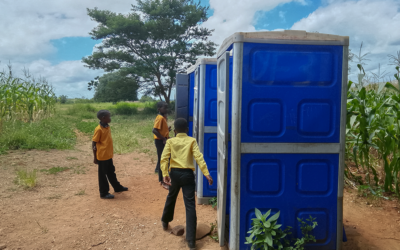
Not so fast, Minister Gwarube: Limpopo learners share three pit toilets
POLOKWANE: Since the school opened 26 years ago, learners at Mashashane Primary School in Polokwane have relieved themselves in unhygienic, unsafe pit toilets. Despite promises and lofty announcements, little has changed.

Disruptive primary school sewage seepage exposes service delivery failures in Khayelitsha
CAPE TOWN: A sewage spill at a primary school has highlighted a wider service delivery crisis in the Khayelitsha community, where residents say blocked drains and sewage overflows have persisted for years. While learners lose out on vital classroom time, the WCED has admitted that this time, the problem emanated from within the school’s own sewerage system.

‘A gamble on a child’s behalf’: the hazard of non-compliant school kitchens
CAPE TOWN: Millions of children rely on South Africa’s school nutrition programme for daily meals, but thousands are being served food from kitchens that have not met basic food safety standards. With a fraction of school kitchens holding the legally required Certificate of Acceptability, a food safety expert has issued a strong warning of the health hazards.

Eastern Cape concedes billions in school underfunding was unlawful
MAKHANDA: The Eastern Cape Department of Education admitted in the Makhanda High Court on Wednesday that it unlawfully withheld money from public schools for six years. About R6 billion has been held since 2020, according to calculations. But schools will not get the money back, and the withholding of funds continues until next year.
The fixers: Inside journalism’s new Education Desk
OPINION: South Africa cannot afford to prevaricate when it comes to fixing schooling. The latest Stats SA figures are stark: overall unemployment has climbed to 33.6%, with youth unemployment at 47.4%. The Education Desk has launched to cover the schooling issues that can make a difference. We know the remedies start not at the end of schooling, but during the foundational years — and earlier, in Early Childhood Development. Join us on this journey.

Finland minister hails school cellphone ban – ‘Break times are full of noise’
CAPE TOWN: Finland’s education minister, who is visiting South Africa this week, says a year-long restriction on cellphone use in schools has transformed the way children learn in class, and how they interact at break times instead of staring at their phones.
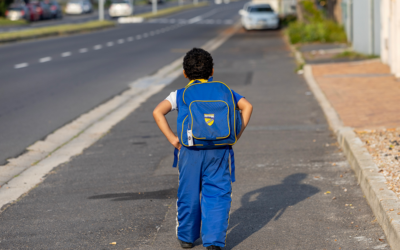
Gauteng school enrolments stretch R71bn budget
JOHANNESBURG: The application process for the 2027 academic year is now open, with Gauteng schools gearing up for rising learner numbers, over-stretched classrooms and ever-tight budgets.

Finland-SA varsity project rethinks teacher education
OPINION: South Africa’s unemployment rate stands at 33.6%, according to the latest Quarterly Labour Force Survey, with the youth jobless rate rising to over 47%. How do we turn things around? Coinciding with a visit to South Africa by Finland’s Education Minister, a decade-long Finnish-South African university collaboration looks at vocational teacher education to provide solutions.