
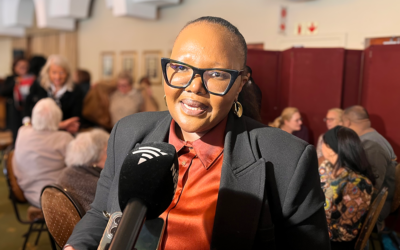
Locked in the past – Schools catalogue freeze risks deepening divide, sabotaging literacy target
CAPE TOWN: South African public schools face relying on a dated textbook catalogue in 2027 as the rollout of new materials remains frozen pending legal advice. With principals calling for urgent guarantees that books will arrive on time, an education expert has warned that a prolonged delay could widen the divide between well-resourced and under-resourced schools – sabotaging an ambitious push to fix foundational literacy and numeracy by 2030.
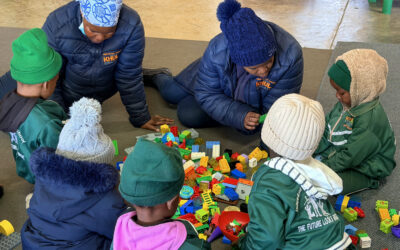
Fixing the Gap: Rural KZN’s fight for Early Education
RORKE’S DRIFT: Over 1.1 million South African children aged three to five are not enrolled in early-year learning, according to the 2024 Thrive by Five Index. In the rural uMzinyathi District of KwaZulu-Natal, Early Childhood Development practitioners and non-profits are working to change that.
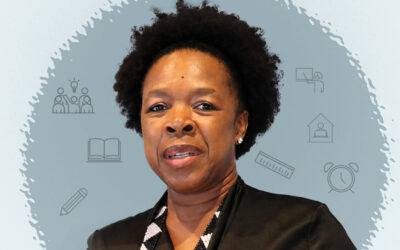
DBE seeks Treasury lifeline for 200 000 teacher aide jobs
JOHANNESBURG: In an exclusive interview, Lala Maje of the Department of Basic Education explains why a suspended teacher assistant programme that boosted youth employment is so desperately needed. A rescue proposal is now before the Treasury, after the programme stalled due to UIF funding issues.
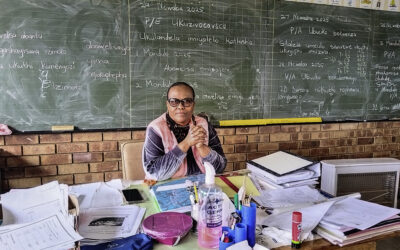
Turning language barriers into learning success
ORANGE FARM: At Laus Deo Primary and Lehae Primary School, teachers are demonstrating that language should never be a barrier to learning. In classrooms where children speak Isizulu, Sesotho, Tshivenda, Xhosa and Xitsonga at home, these educators are finding creative ways to turn challenges into opportunities and to build a lifelong love for reading.

The struggle is real when it comes to the language of learning in classrooms
NORTH WEST PROVINCE: Setswana-speaking Oarabile from rural Kgabalatsane Village in the North West, struggles with a lack of resources and qualified mother tongue teachers at her school. Xitsonga-raised Tsakane, from urban Soshanguve in Gauteng, navigates a complex multilingual environment and the dominance of English as a language of learning and teaching (LOLT).

Makhanda shows the way with home-language literacy
MAKHANDA: The extent of South Africa’s literacy crisis has been laid bare with the Department of Basic Education’s new early learning reading benchmarks, covering 11 official languages. The benchmarks, which will be tracked over years to come, are the result of a R50-million survey that took seven years to develop and research.
Why mother-tongue education is failing our children
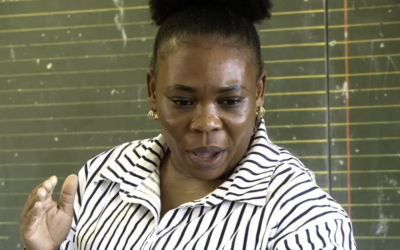
MAKANDA: In Makhanda, children taught in English outperform those taught in their ‘mother tongue’ by more than two to one. The data doesn’t prove mother-tongue education is wrong — it reveals the gap between policy ideals and classroom realities.
Sandpits and Story Circles – How Lenasia South and Orange Farm pre-schools are rewriting their own literacy story
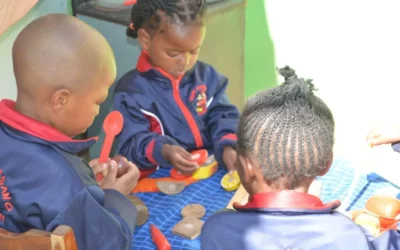
ORANGE FARM: In a country where less than half of Grade 4 learners can read for meaning, educators in Orange Farm and Lenasia South are demonstrating the power of community initiatives to close the gaps.
In the heart of Orange Farm Ext 1, a group of preschoolers sit cross-legged around a sandpit, tracing letters in the dust. “B + A + L + L = ball,” chants their educator, Dimakatso Mbele in English. She then repeats the exercise in isiZulu and Sesotho.
Consider the 19%: What happens to those who can, in fact, read for meaning?
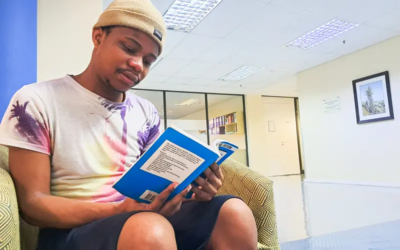
MAKHANDA: Much attention is paid to the 81% of South Africa’s Grade 4s who cannot read for meaning. Leanne Kelly and Rod Amner consider the stories of those from the “other 19%”.

Give children high-quality books from Grades R-12: they will likely read them
MAKHANDA: Lucky Xaba, the Humanities librarian at Rhodes University, arrives at a no-fee school in Makhanda to check on the colourful classroom library she and her team built a few months before. The teacher is absent, but the Grade 1 children are all there, books in hand, reading independently on cushions. On her second visit, they eagerly recount every plotline they’ve read.

20 books make all the difference in a home
MAKHANDA: In the Masete household in Ghost Town, Makhanda, a young girls holds both a baby and a book, confidently reading aloud to her siblings and cousins. It wasn’t always like this. It was a transformation that began with a simple parcel of books dropped at their gate during the height of COVID restrictions.

When home tongues clash with classroom words
MAKHANDA: In the move to have children learn literacy in their home language in their early school years, the many who speak dialects other than official languages are losing out. This may explain why many do worse in “home” language tests than those testing in English.