
NORTH WEST PROVINCE: Oarabile Lentswe and Tsakane Chauke, are the same age and in grade 4, but living in “different worlds” of rural and urban settlements that face distinct mother tongue challenges despite the dawn of democracy more than three decades ago.
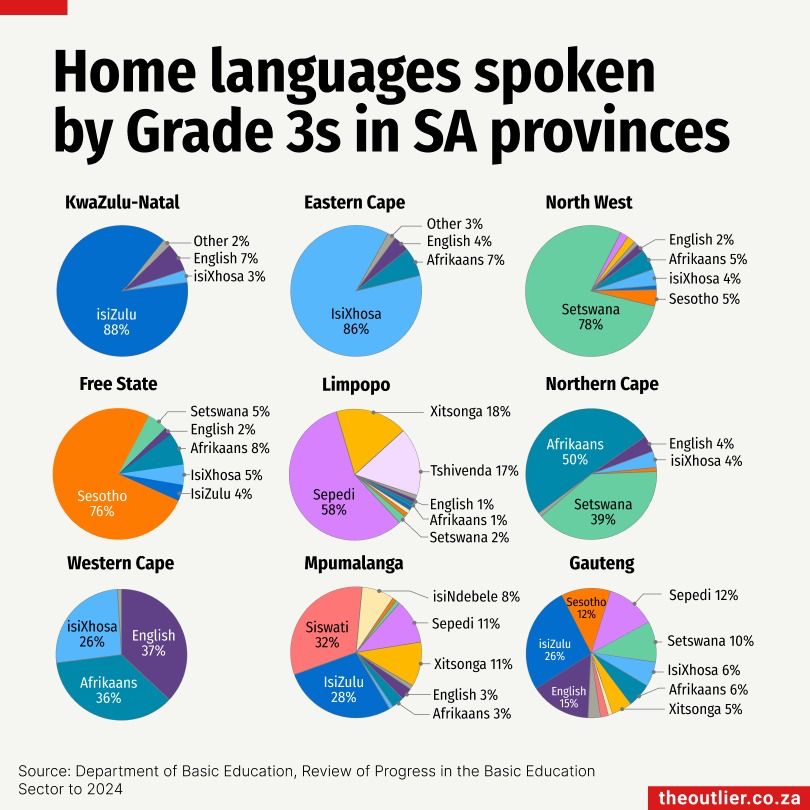
Setswana-speaking Oarabile from rural Kgabalatsane Village in the North West, struggles with a lack of resources and qualified mother tongue teachers at her school. Xitsonga-raised Tsakane, from urban Soshanguve in Gauteng, navigates a complex multilingual environment and the dominance of English as a language of learning and teaching (LOLT).
Oarabile attends Kgabalatsane Primary, a no-fee Quintile 1 school that had limited exposure to English outside of school, which hindered her proficiency in the language when transitioning to bilingual learning in Grade 4.
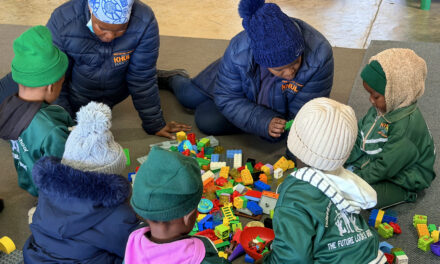
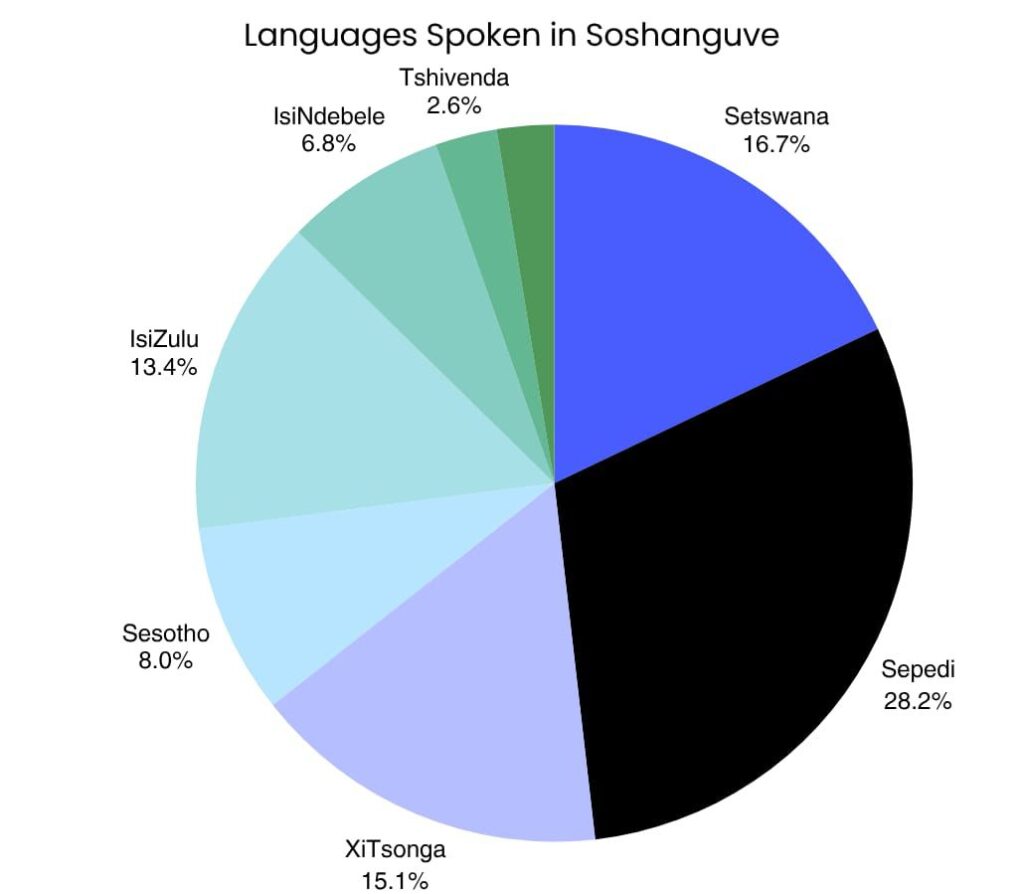
Tsakane attends RS Maluleke Primary, also a Quintile 1 school, which typically had a high degree of language diversity among learners with Sepedi and Xitsonga – making it challenging to cater to every learner’s home language in the early grades.
Although English is not Tsakane’s first language, her school was forced for practical reasons to adopt English as a language of learning from Grade 1 in 2018. The Principal and maths teacher, Mosiwa Sebola, explained that the school struggled to find Sepedi and Xitsonga teachers in the foundation phase. Also, while these languages were widely spoken in the community, there was an ever-increasing number of non-Sepedi and Xitsonga speakers, mostly migrants from Tanzania, Kenya and Namibia.
Challenges persist, he said. Besides children being forced to learn in a second language rather than their home languages, teachers lack the resources, skills and innovative approaches to teach effectively in multilingual classrooms.
These classroom challenges play out in different ways and in multiple languages across the country, as South Africa confronts the reality of its severe literacy crisis.
While 2025 has been a watershed year for South Africa’s Mother Tongue-based Bilingual Education (MTbBE) “equaliser” policy, it has also been the year that confirmed the extent of the crisis.
Only 46% of surveyed Grade 4 learners reached an adequate level of reading fluency in any of the official languages, according to Funda Uphumelele National Survey (FUNS) outcomes released earlier this month.
In recognition that a “one-size-fits-all approach” does not work in such a complex, multilingual country, FUNS data track critical reading benchmarks in eleven home languages from Grade 1 to Grade 4.
Foundation years fared even lower, with about 70% of Grade 1 to 3 learners unable to recognise letters or read words quickly enough to understand them.
There were significant inequalities in the likelihood of reaching benchmarks by language, province, gender, and socio-economic status.
Learners assessed in English were most likely to reach benchmarks by Grade 4, as were learners in the Western Cape and Gauteng, compared to other provinces. These advantages are largely attributable to the higher average socio-economic status of these groups.
The survey found that children in better-resourced quintile 5 schools are roughly twice as likely to reach benchmarks as children in no-fee schools (quintile 1-3).
The gender gap is wide, with girls in some languages being twice as likely to reach the benchmarks as boys.
These results cast a shadow on South Africa’s ability to achieve its 2030 goal that all 10-year-olds will be able to read for meaning.
The benchmarks are underpinned by the DBE’s support of MTbBE’s potential to address the country’s literacy crisis.
MTbBE is defined as a transformative framework that uses a learner’s home language as the primary tool for teaching and learning, while gradually introducing English. It strengthens the foundation for learners whose home languages were excluded after Grade 3, unlike English and Afrikaans speakers, who have a historic advantage.
The FUNS results also reveal challenges and complexities in implementing effective MTbBE learning: insufficient teacher training, a shortage of suitable learning materials, difficulties in developing a comprehensive academic lexicon across all languages, and varying levels of learner language proficiency.
The reinforcement of MTbBE policy by FUNS follows key developments this year, including:
- The extension of MTbBE to more African languages for Mathematics, Science, and Technology beyond Grade 3 into Grade 4.
- President Cyril Ramaphosa’s firm commitment to the MTbBE rollout in his State of the Nation address.
- The allocation of R57 million in the 2025/2026 budget, earmarked for MTbBE’s national rollout, including teacher training.
- Basic Education Minister Siviwe Gwarube’s parliamentary pledge to implement MTbBE pedagogy in Mathematics, Natural Science, and Technology for identified schools in Quintiles 1-5 by the end of 2025.
The MTbBE rollout marked a “milestone”, after decades of policy discussions, said Professor Leketi Makalela, DBE’s MTbBE technical director and founding director of the Hub for Multilingual Education and Literacies at the University of the Witwatersrand.
Tracking Literacy Trends
“Previously, most schools for African-language speakers switched to English-only instruction in Grade 4, a legacy of the apartheid system. The new programme, reinforced by the Basic Education Laws Amendment (BELA) Act, seeks to correct this imbalance and promote linguistic diversity and equity”.
“The African child has a constitutional right to receive education in their home language, thereby equalising the education system as directed by the Constitution,” said Makalela.
The rollout is focused on the nine previously marginalised African languages (IsiZulu, IsiXhosa, IsiNdebele, Siswati, Sesotho, Setswana, Sepedi, Tshivenda and Xitsonga), to bring parity with English and Afrikaans.
Hailing the value of the FUNS benchmarks, Gwarube pledged that the data would be used at three levels: to track progress nationally, provincially and by language in years to come; to strengthen accountability and support through district offices and school management using new, language-appropriate assessments; and in classrooms, where teachers will run diagnostic checks and target remediation.
Potential vs disadvantage
While MTbBE is now mandated and monitored by the Presidency, scholars and language specialists point to a mismatch between a well-intended policy and practical classroom realities.
It has prompted widespread discussion, with advocates highlighting the potential of Mother Tongue instruction to boost learner confidence, improve literacy, and address long-standing inequities.
One such proponent is Mmeme Makgopela, principal of Kgabalatsane Primary. Since introducing MTbBE into the grade 4 classroom this year, she has observed improved comprehension among learners. By extending Setswana, “their understanding of subjects has drastically improved after receiving instructions in maths, natural science and technology,” she said.
But on the ground, parents often believe that English proficiency is vital for academic and economic success. They worry that prioritising African languages could disadvantage their children in the long run and limit their chances of university admission and employment.
In a tangential controversy, some Afrikaans-speaking institutions critical of BELA feared an erosion of their single-language autonomy.
Describing MTbBE as a “breakthrough” in an open letter to Gwarube in September, a group of top educators said. “{It} offers children the best of both worlds: the chance to learn and understand deeply in their own language, while also building strong English skills. Research from South Africa and across the globe is clear — learners achieve more, stay longer in school, and go further in life when taught in this way.”
Expressing urgency, the collective called on the Minister to affirm MTbBE as a core priority, “and to provide the sustained political will and resources it needs to succeed”.
The SA Democratic Teachers’ Union also raised concerns about the lack of funding and the haste with which the implementation directive was issued to participating schools, less than three months before the start of the 2025 school year.
MTbBE’s premise is that English should support the mother tongue, thereby making classrooms bilingual. Therefore, teacher education needs to emphasise bilingual pedagogy — how to effectively teach in two languages without causing cognitive overload.
Mixed signals elsewhere in Africa
Mother-tongue bilingual learning remains both a developing field and a subject of contestation.
After the FUNS launch, AfricaNews.com reported that two West African giants were taking opposing policy stances. Nigeria reversed its mother-tongue policy, reinstating English-only instruction from pre-primary through secondary school, a move defended by the Education Minister as “evidence-based.” In contrast, Ghana mandated compulsory mother-tongue instruction from Kindergarten to Primary 3, thereafter transitioning gradually to English.
These shifts underscore the complexities of language and education policy in the region. They also reinforce the oft-stated observation that primary barriers to successful education reforms are not the languages themselves but systemic issues such as insufficient teacher training, inadequate materials, and limited resources, as noted in the 2025 UNESCO report, Languages Matter: Global Guidance on Multilingual Education, which advocates that “every learner has a right to learn in a language they understand”.
Dr Xolisa Guzula, a language and early biliteracy expert at the University of Cape Town’s School of Education, believes the MtbBE policy is the way to go. “While we anticipate challenges as with any changes that take place in education, we believe that with support for teachers through teacher training, materials development and mentorship, this reality will be seen by all.”
The article has been produced with the support of the Henry Nxumalo Foundation