
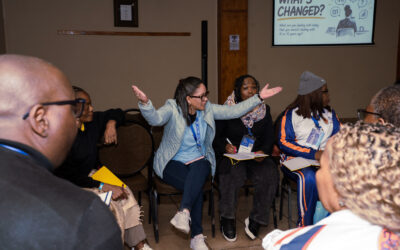
Principal association president issues 5-step appeal to ease burnout pressure
POLOKWANE: About 850 principals gathered in Limpopo to take stock of their challenges, with the president of the SA Principals Association calling on the government to reform systems to free up principals to do their job of leading schools.
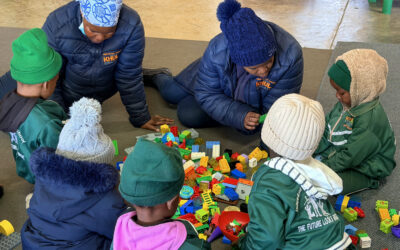
Fixing the Gap: Rural KZN’s fight for Early Education
RORKE’S DRIFT: Over 1.1 million South African children aged three to five are not enrolled in early-year learning, according to the 2024 Thrive by Five Index. In the rural uMzinyathi District of KwaZulu-Natal, Early Childhood Development practitioners and non-profits are working to change that.
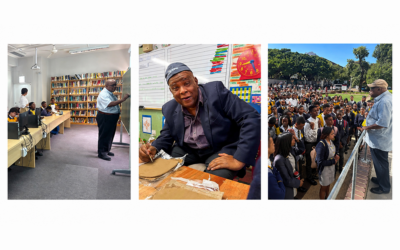
Two years at ‘Cherry High’: Inside Jonathan Jansen’s frontline fight to fix our schools
CAPE TOWN: As a social scientist returning to the classroom, Prof Jonathan Jansen tackles South Africa’s education crisis head-on in Worth the Fight. He exposes how out-of-touch policies sabotage working-class schools, making the case for why real change demands leadership and a community effort.

Primary school teacher Sonwabile Gana is stitching dignity back into the classroom
ATLANTIS: Stitch by stitch, a teacher in Atlantis outside Cape Town is using his self-taught sewing skills to repair learners’ torn uniforms – which in turn builds confidence and participation in class.

Eastern Cape teacher assistants show real impact of stalled mega-jobs project
MAKHANDA: About 1.4 million youth in the country, including the Eastern Cape, have benefitted – in the short-term at least – from a massive youth employment project that has alleviated the daily stresses of teachers in about 23,000 schools since 2020. But now many are back home, trying to build on their experience, while the project’s future is uncertain.

Disruptive primary school sewage seepage exposes service delivery failures in Khayelitsha
CAPE TOWN: A sewage spill at a primary school has highlighted a wider service delivery crisis in the Khayelitsha community, where residents say blocked drains and sewage overflows have persisted for years. While learners lose out on vital classroom time, the WCED has admitted that this time, the problem emanated from within the school’s own sewerage system.
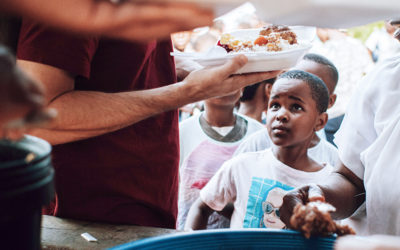
‘A gamble on a child’s behalf’: the hazard of non-compliant school kitchens
CAPE TOWN: Millions of children rely on South Africa’s school nutrition programme for daily meals, but thousands are being served food from kitchens that have not met basic food safety standards. With a fraction of school kitchens holding the legally required Certificate of Acceptability, a food safety expert has issued a strong warning of the health hazards.

Finland minister hails school cellphone ban – ‘Break times are full of noise’
CAPE TOWN: Finland’s education minister, who is visiting South Africa this week, says a year-long restriction on cellphone use in schools has transformed the way children learn in class, and how they interact at break times instead of staring at their phones.
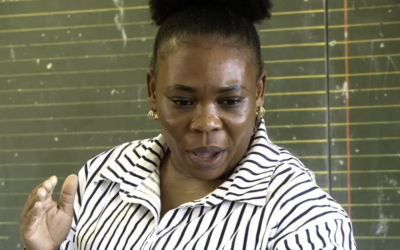
Why mother-tongue education is failing our children
MAKANDA: In Makhanda, children taught in English outperform those taught in their ‘mother tongue’ by more than two to one. The data doesn’t prove mother-tongue education is wrong — it reveals the gap between policy ideals and classroom realities.

How funding apartheid fail young library users
MAKHANDA: When Grade 11 learner Sipho Mthembu arrives on Monday afternoons at Duna Library, his local facility in Joza, Makhanda, he’s not looking for books to borrow. He needs something more basic: a quiet place to study with working electricity. Yet the library closes at 5 pm, soon after school ends.
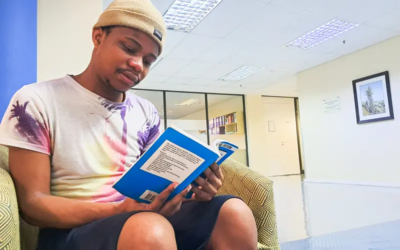
Consider the 19%: What happens to those who can, in fact, read for meaning?
MAKHANDA: Much attention is paid to the 81% of South Africa’s Grade 4s who cannot read for meaning. Leanne Kelly and Rod Amner consider the stories of those from the “other 19%”.

Give children high-quality books from Grades R-12: they will likely read them
MAKHANDA: Lucky Xaba, the Humanities librarian at Rhodes University, arrives at a no-fee school in Makhanda to check on the colourful classroom library she and her team built a few months before. The teacher is absent, but the Grade 1 children are all there, books in hand, reading independently on cushions. On her second visit, they eagerly recount every plotline they’ve read.
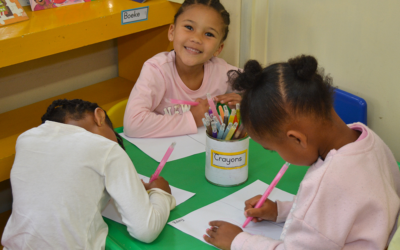
SA spends 1.8% of its education budget on pre-schoolers: the damage shows
MAKHANDA: Early childhood development (ECD) is a term that is being bandied about a lot these days. Minister of Basic Education Siviwe Gwarube has allocated a substantial amount of additional funds for ECD centres to register through the Bana Pele Mass Registration Drive and receive an increased subsidy. A good start. But much more needs to be done.