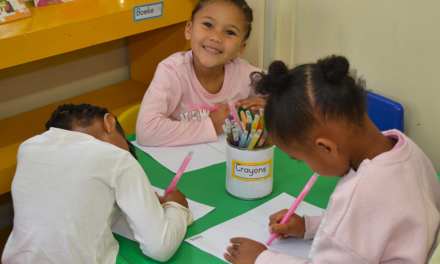

MAKHANDA: Lucky Xaba, the Humanities librarian at Rhodes University, arrives at a no-fee school in Makhanda to check on the colourful classroom library she and her team built a few months before. The teacher is absent, but the Grade 1 children are all there, books in hand, reading independently on cushions. On her second visit, they eagerly recount every plotline they’ve read.
These are isiXhosa Grade 1 learners in a country where only 13% of children who speak an African language can read for meaning by the end of Grade 4. Xaba’s conclusion: “They are already becoming independent readers because they have access to good books.”
The Rhodes Library and local NGOs, the Lebone Centre, have established over 40 Foundation Phase classroom libraries in Makhanda.
But there are over 160 FP classrooms in the city. The Eastern Cape Department of Education (ECDOE) hasn’t built a single library.
The simple math of access
A classroom library with 100 high-quality books costs about R20,000. Over five years, serving 175 learners, this amounts to R114 per learner, which is less than 7% of the R1,750 annual allocation that the National Education Minister mandates provinces spend per learner.
In the Eastern Cape, the Department of Education has withheld a large proportion of this funding from its fee-exempt schools – totalling about R5 billion since 2020 – on the pretext that its “centralised procurement” strategy is providing scaled resources for all schools in the province.
Fewer than 3% of retail book sales for children are in African languages, despite 80% of the population speaking African languages at home. Publishers cite insufficient demand because schools and libraries aren’t buying, creating a vicious cycle.
Research shows that classroom libraries increase reading frequency by 70% compared to centralised libraries. International ‘book flood’ studies demonstrate that having plentiful books in classrooms produces significant literacy gains. Books are immediately accessible, teachers integrate them into lessons, children borrow them easily, and there’s no intimidating journey to restricted-hours facilities.
Investment in classroom libraries would also stimulate an explosion in the African language book industry – authors, illustrators, designers, and established and start-up publishers could flourish.
When quality books arrive, magic happens
In September, the Lebone Centre sent 12 high-quality children’s books to five local primary schools. After devouring the volumes, five Grade 6 teams from different schools competed on 40 questions about the books.
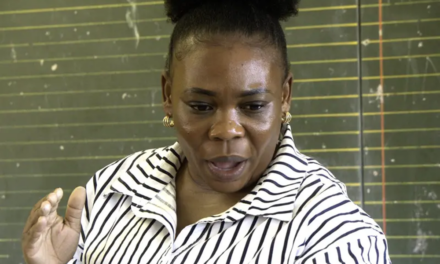
Walter Mapfumo, winning teacher from Grahamstown SDA School, reports: “The extent to which it has stimulated the love of reading in our learners is quite profound. We face the pandemic of learners failing to read for meaning, but the books and the opportunity to participate in the Quiz have created a culture of independent reading in the school. The ever-growing enthusiasm for reading amongst our learners has taken a life of its own.”
Everyone in his class read the books, not just quiz participants. When children who supposedly “don’t read” receive great books, they devour them, trade them, and discuss them with enthusiasm. They become readers.
This success highlights the failure of South African education: after the Foundation Phase, formal reading instruction disappears – and so do the books. When children should transition from “learning to read” to “reading to learn” – and crucially, to reading for pleasure -the scaffolding vanishes.
Reading must continue beyond Grade 3
Evidence of our systemic reading failure extends through secondary school. At one Makhanda school, Grade 12 learners studying the Fugard play My Children, My Africa had no copies of the text, despite the availability of free online digital versions. They hadn’t watched the play (available for free on YouTube) or accessed online study guides. The teacher taught plot summaries instead.
Rhodes University students report learning short summaries of their complex isiXhosa school set works for exams rather than reading the full books.
The 21st century saw YA literature’s “golden age” – Harry Potter, Hunger Games, plus African digital platforms like Jalada revolutionising access. South African authors like Lauren Beukes and Edyth Bulbring, as well as series like Fundza’s Harmony High, have hooked young readers. However, these books are often absent from most public libraries and schools.
Literacy researcher Maryanne Wolf demonstrates that deep reading fosters empathy and critical thinking through sustained engagement with books – essential skills for navigating life and democracy.
The Rhodes survey revelation
A survey of 300 first-year Rhodes University Journalism students earlier this year reveals a stark divide between those who learned to read as a ‘survival strategy’ to pass exams and those who discovered reading for pleasure. The survivalists reported significantly lower university preparedness.
Surprisingly, heroes for the readers were digital platforms like Wattpad and social media. Students who read on their phones, discovering stories that reflect their lives and languages, tend to show stronger academic outcomes.
Most tellingly, strong readers mention one factor: access. Whether through libraries, classroom collections, or phones, successful readers found books somewhere, somehow.
The digital goldmine nobody’s mining
On every teacher’s government-issued laptop in South Africa lies potential access to thousands of free stories and audiobooks in eleven languages. Nal’ibali offers multilingual stories and audiobooks online and distributes them on WhatsApp.
Book Dash creates open-source picture books. African Storybook provides downloadable books in African languages. Fundza targets teenagers with thousands of locally written books and stories.
Research in Makhanda reveals that most librarians and teachers are not aware of these resources. If teachers loaded these free collections onto their laptops, they could send stories weekly to parents via WhatsApp with simple instructions: read this to your child, or let them read to you. For parents who lack confidence in reading, audiobooks and read-aloud videos are ideal options.
Most parents have phones; WhatsApp is ubiquitous, even in low-income communities. In Makhanda, high-speed uncapped fibre costs just R5 per day. Teachers could encourage parents to download free literacy apps and access thousands of read-aloud YouTube videos.
Simple solutions, systemic failures
In Makhanda, GADRA Education’s QondaRead program shows what’s possible with basic technology. They provide classrooms with portable, lockable data projectors and speakers. Teachers project lesson materials, including books and videos, onto classroom walls.
Imagine combining all these elements: physical classroom libraries supplemented by digital projection, teachers sending weekly stories to parents’ phones, audiobooks for struggling readers, and videos modelling reading techniques.
A raft of NGOs, all ready to guide book selection, are operational. IBBY South Africa and the Puku Foundation focus on indigenous language books. The South African Literary Awards (SALA) provides annual shortlists. UNISA’s Children’s Literature Awards promote African language stories.
Nal’ibali maintains a searchable database of recommendations filtered by age, language, and theme. Fundza has become an expert in teen literature.
One day of training could show every teacher how to access free resources, load them onto their laptops, and share them via WhatsApp. Teachers already use WhatsApp to communicate with parents about homework and meetings. Adding a weekly story could take seconds.
Libraries could operate beyond the Foundation Phase, all the way to Grade 12. The DOE could fund the creation of read-aloud videos in African languages. Simple projectors could display stories and play audiobooks – not fancy smart boards.
Implementation gaps
Currently, the big NGOs driving content creation work in silos. Nal’ibali focuses on communities, not schools, and Fundza bypasses schools entirely to reach teens directly. No mandate exists for the use of digital resources in schools. No training is provided.
While NGOs produce world-class content, it often fails to reach classrooms. While parents have phones capable of receiving daily stories, they typically receive only homework notifications.
Much of the content is free. The technology is affordable. Organisations stand ready to guide book selection. Parents have phones. Teachers have laptops.
The question isn’t whether South Africa can afford to transform literacy – it’s why available solutions remain unimplemented. When Grade 1s with books become independent readers, when Grade 6s devour quiz books so enthusiastically that their teacher reports minimal preparation is needed, the message is clear: children will read when given the chance.