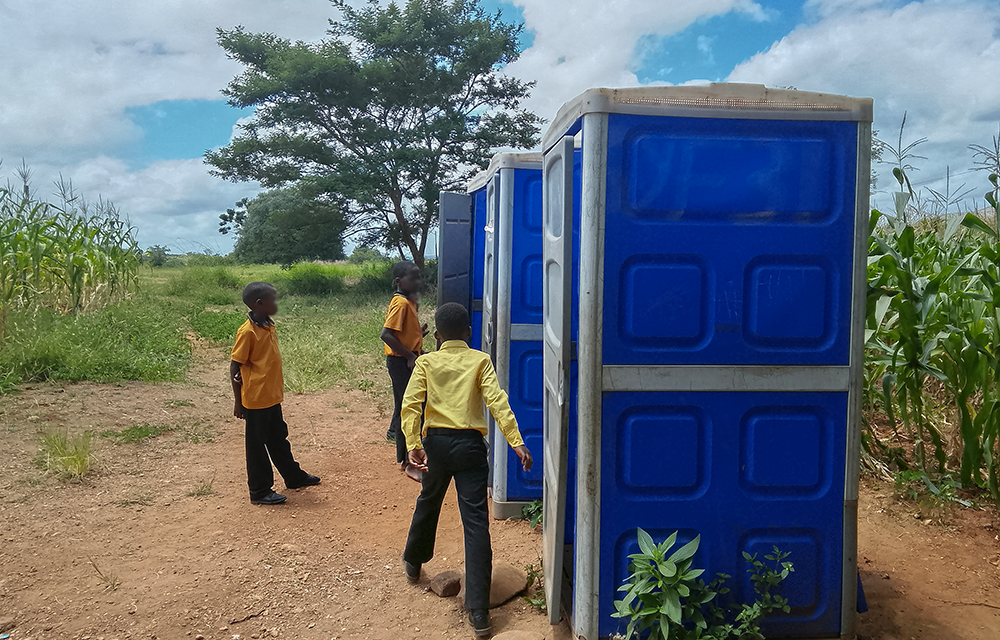
POLOKWANE: Since the school opened 26 years ago, learners at Mashashane Primary School in Polokwane have relieved themselves in unhygienic, unsafe pit toilets. Despite promises and lofty announcements, little has changed.
Learners at Mashashane Primary School in Polokwane, Limpopo, still share three zinc pit toilets.
During a visit to the school at Moshate Village in August, a foul smell emanated from the small toilets. There were no taps for learners to wash their hands. An additional brick pit toilet was under construction. Teachers use two Enviroloo (waterless) toilets.
In July, Department of Basic Education minister Siviwe Gwarube said that the department has been victorious in the national campaign to eradicate school pit latrines. Gwarube said all 3372 schools that were flagged through the government’s 2018 Sanitation Appropriate for Education (SAFE) Initiative now have safe and dignified toilets. Plastic mobile chemical toilets at Morwasethula Primary School. Photo: Chris Gilili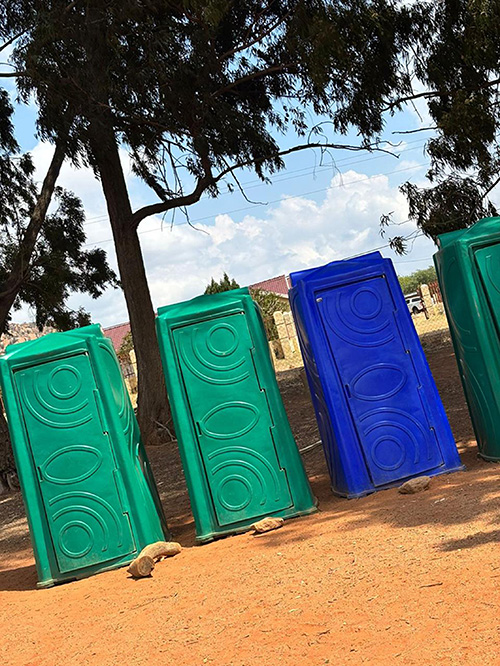
Mashashane Primary School does not feature on the SAFE list, but it was categorised as a Priority 2 school – with inadequate sanitation – by the Limpopo Education Department following the release of a National Education Infrastructure Management System list of 8,700 public schools with pit toilets – of which 2,500 were in Limpopo, as reported by a 2025 report by GroundUp.
Tebogo Sethomole, a teacher at the school, said the school has been using pit toilets since it was established in 2000. He said The school has over 250 learners who share three pit toilets. “Fortunately, we have never had any incidents of learners drowning in the toilets, but they get cuts on their hands from using these toilets,” said Sethomole.
“We need more toilets, because besides the safety, three toilets are not enough. Sometimes the learners form a long queue just to relieve themselves. It’s not a good sight,” Sethomole added.
Another teacher who requested anonymity said they sometimes needed to get drinking water for learners from village residents.
The chairperson of the School Governing Body, Rachel Lebaka, said parents have raised safety concerns. “Even these toilets you see, we recently fixed them as the community because we were tired of waiting on the department’s empty promises. Our children are not comfortable with using these toilets. My daughter says she prefers to relieve herself after school is out,” said Lebaka.
She said other schools in the area faced similar challenges.
The basic pit latrine toilets that are used by learners at Mashashane Primary School. August 2026. Photo: Chris Gilili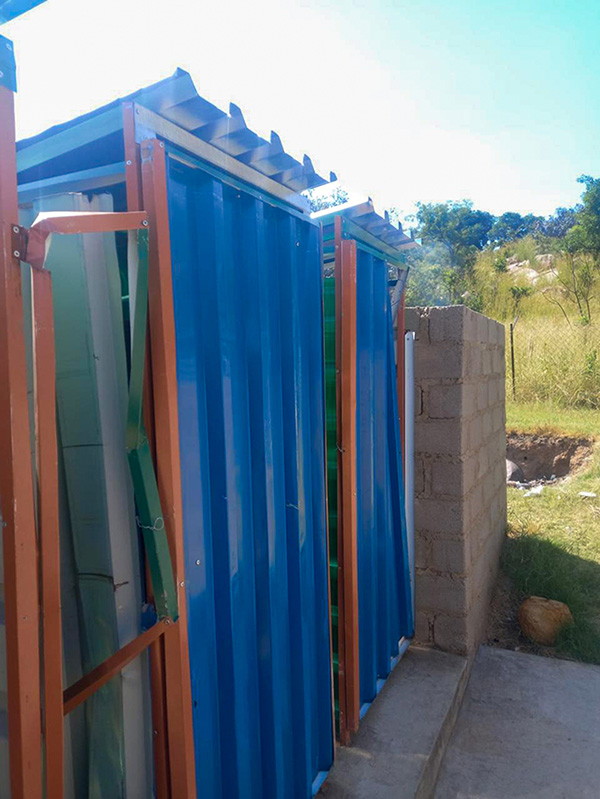
The Limpopo Department of Education has been promising adequate sanitation structures for a decade.
In May this year, Daily Maverick reported that while the department has demolished many pit toilets at public schools in Thohoyandou, thousands of learners still rely on poorly maintained chemical toilets, with the department citing budget constraints.
Betty Mothapo, an Equal Education community leader in Limpopo, said pit toilets were still a norm in rural areas surrounding Polokwane. “Because of the lack of maintenance and basic supplies, learners and their teachers are forced to use facilities that are unsafe and pose serious health risks … Young children have to use these toilets every day with no privacy, no water to wash their hands, and exposure to germs and waste,” said Mothapo.
The eradication of pit toilets does not mean a school’s sanitation problems are necessarily over. At nearby Morwasethula Primary School, the department demolished eight pit toilets about two years ago, and paid a service provider for four rented plastic mobile toilets for 200 learners, according to a teacher who asked for anonymity.
We’re tired of waiting on the department’s empty promises. Our children are not comfortable using these toilets. My daughter says she prefers to relieve herself after school is out.
“We have been complaining about the sanitation situation at the school for a number of years. We were using very bad pit toilets … The Department of Education came to look about five years ago, and they promised to build us adequate toilets. But that has not happened. After a long time, they just demolished the old pit toilets, and gave us chemical mobile toilets.”
The mobile toilets were very difficult to use; they were often dirty, sometimes not cleaned for weeks. “The temperature in our villages is always hot, and the smell coming from these toilets is unbearable. We need proper toilets that can flush – and water,” she added.
In Thohoyandou, learners at Dzivhani Primary School also use plastic mobile toilets instead of promised brick toilets.
Premature to declare victory
Equal Education (EE) said it was premature for the Minister to declare victory.
A cement pit toilet seat at Mashashane Primary School. Photo: Chris Gilili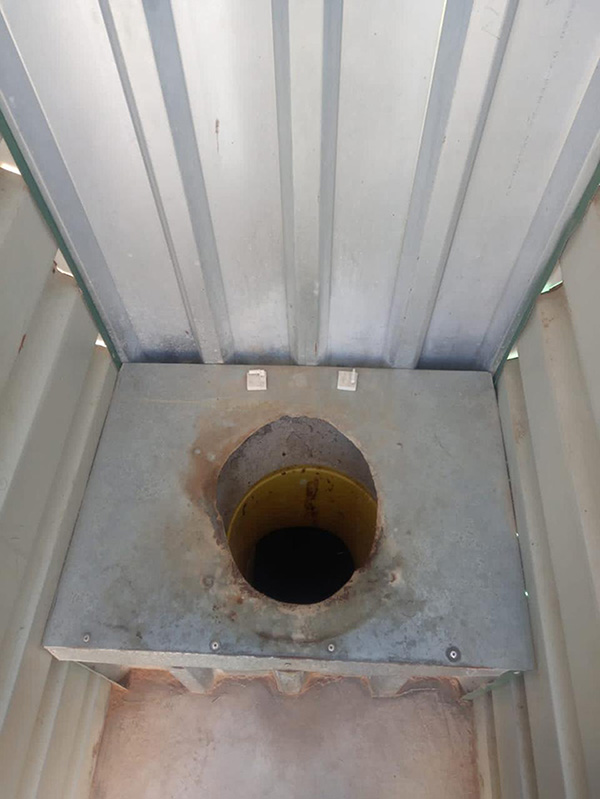
In the Eastern Cape last week, it was revealed that a learner had given birth to a newborn baby inside a pit toilet at a school in Bizana.
Inadequate sanitation also extends to Gauteng Province, where it was reported by TimesLive last that over 2000 learners attending Villa Liza Secondary School in Ekurhuleni are sharing 16 mobile toilets while 24 other toilets are out of order.
Earlier, Daily Maverick was among outlets that reported that Gwarube’s statements were not realistic, as a long list of schools nationwide still relied on pit toilets.
Equal Education accused the Minister of accepting budget cuts and restructuring that impacted on learners’ rights and well-being. “The School Infrastructure Backlogs Grant – an indirect conditional grant that funded national programmes, such as SAFE, which were dedicated to ending critical school infrastructure backlogs – has been merged into the Education Infrastructure Grant. In real terms, spending on school infrastructure is decreasing,” said EE.
Shifting deadlines
The deadline for the eradication of school pit toilets has been shifted numerous times since the original deadline of March 2023.
“The Minister herself has previously acknowledged that the 2018 SAFE audit was incomplete and that schools may have been missed or may have since developed unsafe sanitation needs. In April 2025, the DBE committed to conducting a new national audit to identify these schools. More than a year later, this audit has still not been published,” EE said in a statement.
Responding to queries, DBE spokesperson Lukhanyo Vangqa said the department is still busy with the conditional assessment of infrastructure, including schools like Mashashane. “Once this is completed, it will be shared with the public.”
He said it is the duty of the provincial departments to use available resources to maintain and improve schooling infrastructure, including sanitation.
“The reality is that we have a shortfall of R120 billion for infrastructure alone; The challenges facing provincial education departments are immense and require substantial funding. Without additional funding from the National Treasury, provincial education departments will continue to face significant infrastructure backlogs.”
He said the national intervention ended with the completion of the SAFE Initiative, and responsibility had now returned to the Provincial Education Departments. “The DBE will continue to provide technical support as well as monitoring of the PEDs.”
This article by EdDesk was also published by Sowetan.