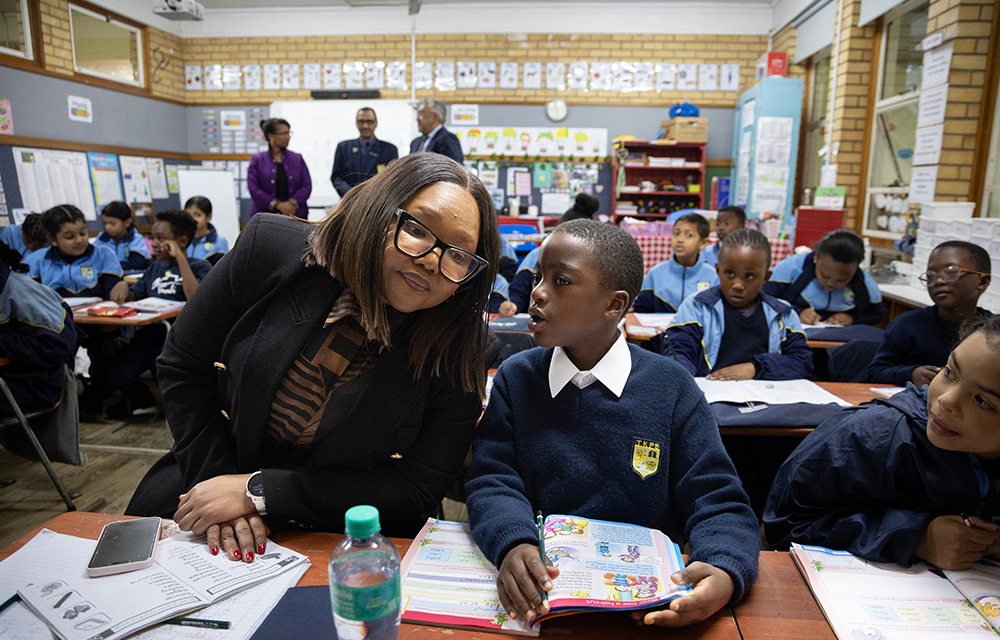
CAPE TOWN: South Africa’s school infrastructure is caught in a double squeeze: shifting learner movements are leaving rural classrooms empty while urban demand outstrips space, according to Basic Education Minister Siviwe Gwarube.
“We have an infrastructure backlog that is sitting at R140-billion,” said Basic Education Minister Siviwe Gwarube, in an interview, two years into her tenure as minister in the Government of National Unity.
The pressures were mounting in certain areas, with demand concentrated in key metro areas in particular. Within 24 hours of opening its online admissions system in August, Gauteng received over 200,000 Grade 1 and Grade 8 applications, according to Gwarube. By the deadline, Friday, 4 September, the province had received more than 800,000 applications, though this represents about 346,000 learners seeking placement. Education MEC Lebogang Maile pointed out to News24 that the overall number of available spaces (more than 405,000) was not the problem, but the squeeze was being felt in high-demand, densely populated areas. For instance, demand was high in Alex, while schools in other areas had classroom space but were too far away.
South Africa currently has about 13.7-million learners, a figure Gwarube expects to rise significantly as access expands to early childhood development (ECD) centres and Grade R, which is now compulsory. Last year, President Cyril Ramaphosa said that 1.3 million children between 0 and 5 years old do not receive pre-schooling.
The national education infrastructure grant currently allocates about R16-billion to provinces each year, but Gwarube acknowledged that this is insufficient. “I understand that sometimes the scale of the problem and the scale of the pressure does not always get serviced by the amount that we allocate to provinces.”
Rural migration to economic hubs is putting particular pressure on Gauteng and the Western Cape, while regional towns like Polokwane and Mbombela face growing demand, with provinces increasingly turning to temporary structures.
We have to be a lot more attuned to people’s movements and to migration patterns… We can’t just blindly build anywhere
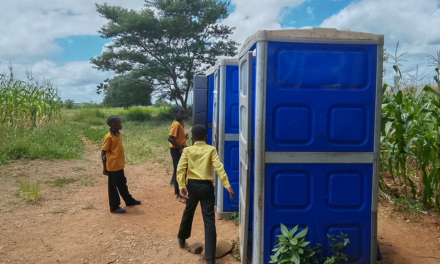
Over the past five years, the Gauteng Department of Education has spent R1.45 -billion on temporary mobile classrooms and ablution facilities instead of permanent schools.
The money used on these facilities could have built about eight to 10 brick schools at an average cost of R175-million, according to Maile. His department has set aside almost R4-billion for the construction of schools over the next three years.
In Limpopo, nearly half of all schools rely on mobile classrooms, according to a Parliamentary briefing by the Limpopo Education Department. During the briefing MPs raised concerns about the continued reliance on temporary classrooms. DA MP Ciska Jordaan said there was a 30% difference in costs between construction of a brick-and-mortar classroom and a mobile classroom.
While mobile classrooms may be cheaper initially, Jordaan argued, they required ongoing maintenance and would eventually need to be refurbished or replaced.
Gwarube appealed to provinces to balance the urgency of providing classrooms with the need to provide learners with safe and dignified learning environments. “I would want provinces to prioritise building bricks and mortar because ultimately, those are temporary measures,” she said.
The challenges in the Eastern Cape are well documented, with an estimated R82-billion school infrastructure backlog and chronic governance failures in planning and budget allocation, according to a 2025 University of Fort Hare research report on the Amathole West and Joe Gqabi districts. Rural schools face severe disparities, with more than half of respondents dissatisfied with the condition of the toilets.
While some centres in South Africa were pressure cookers in terms of demand, other rural areas are facing declining school enrolment and possible closure. Acknowledging the controversy surrounding planned closures in the Eastern Cape, Gwarube said rationalisation becomes necessary when falling enrolment compromises teaching quality. In January, the Eastern Cape Department of Education revealed that 203 schools were being reviewed after learner enrolment fell below viable thresholds. Of these, 112 schools have fewer than 135 learners, while 18 schools have fewer than 50 learners, placing them at high risk of closure or consolidation under the School Rationalisation and Realignment Programme.
Once a school drops below about 120 learners, there is a risk of multi-grade teaching, where learners from different grades are taught together.
Gwarube’s department has drawn flak from civil organisation Equal Education head Itumeleng Motlhabane, who said rationalisation cannot be used as a scapegoat for school infrastructure failures. “Parents have been voting with their feet and taking their children where there is better schooling infrastructure. That then forces the number in a lot of schools to go down,” said Motlhabane.
Gwarube stressed that provinces could not close schools without first consulting communities.
The minister said the Eastern Cape’s declining rural school populations were partly linked to parents moving their children to cities and metropolitan areas. According to Statistics South Africa’s mid-year population estimates released last month, there was an exodus of almost one million people from the province between 2016 and 2026.
Migration trends, Gwarube argued, should force a rethink on school infrastructure planning. “We have to be a lot more attuned to people’s movements and to migration patterns,” Gwarube said. “We can’t just blindly build anywhere. We just simply don’t have the luxury to do that.”