
POLOKWANE: Artificial intelligence is forcing schools to rethink how homework is set and assessed, with principals at a recent national conference raising concerns about learners using AI to complete work they may not understand.
The growing use of artificial intelligence (AI) is forcing school principals to rethink how they set and mark homework and other take-home assessments.
The issue surfaced during a plenary at the South African Principals’ Association (SAPA) conference in Polokwane, themed “Future Ready.” Principals voiced concern that learners are using AI to complete homework they do not understand, also leaving teachers in the dark about how they arrived at their answers.
Delegates attend the South African Principals’ Association national Conference in Limpopo on 4 September 2026. Photo: Abelife Photography/SAPA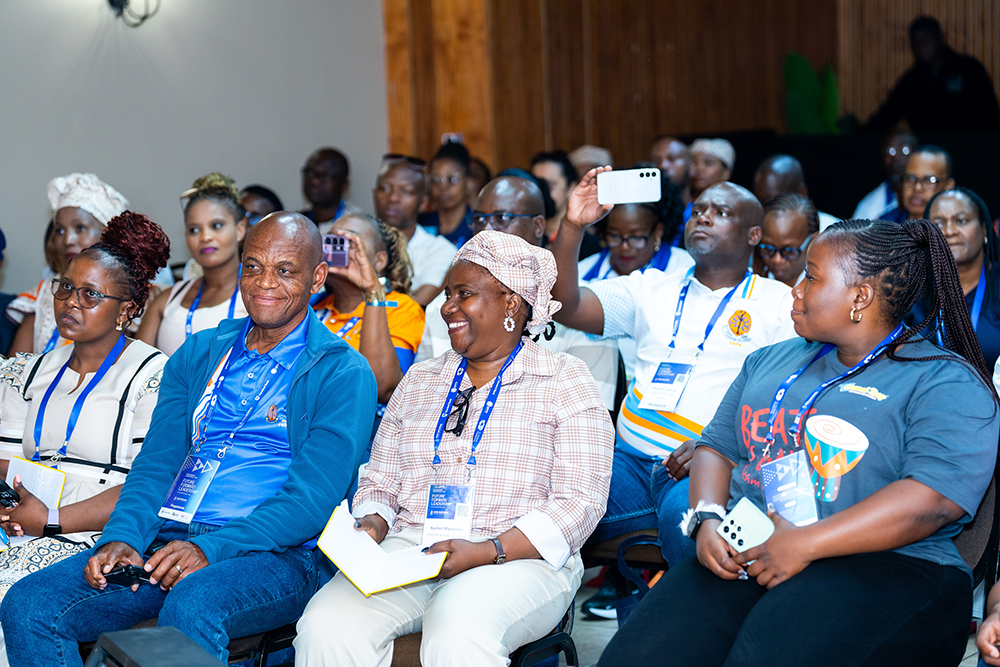
A number of principals said schools needed to embrace new technology without losing sight of whether learners were actually doing the work and understanding it.
In Mpumalanga, Witbank High principal Richard Olsin told The Education Desk that homework no longer measured a learner’s ability to understand. “Back in the day, we could mark it and believe the learner did the work. Now they score a total [100%] in homework, but when exams come, they don’t perform as we expect them to.”
In North West, Sensako Primary School principal Stephen Sedikane noticed a similar trend: Learners as young as Grade 4 are using AI for take-home activities, yet are unable to explain their answers. “The inability to explain what is placed on paper is what we have a problem with because, despite being given liberty to research, they have not learnt anything, which begs the question of whether they actually did the work or not,” Sedikane said.
If we can throw everything to AI, then we’ll be raising a different kind of society of laziness, failing to think, and not able to analyse and judge.
The association’s president Mashudu Ramulumo recommended a redesign of assignments. “It’s not time to phase out homework because of AI. The onus lies on the teacher. If you just give them … homework where you did not even plan your lesson, obviously they are going to use AI to find an answer,” he told The Education Desk.
Homework remained necessary to complete the learning process, he said, but tasks should require learners to apply knowledge, follow specific instructions and demonstrate their understanding.
Teachers and principals also needed training to understand the technology, he warned, saying that some learners were ahead of educators who often lacked basic digital skills.
SAPA’s Mpumalanga convener Never Nthane said schools should treat AI as a resource, not a substitute for learning, and ensure assessments required learners to think independently. “If we can throw everything to AI, then we’ll be raising a different kind of society of laziness, failing to think, and not able to analyse and judge,” he warned.
Teachers should use class time to assess whether learners understand the work before they leave school. “Let’s say you have 60 minutes, spend 50% of that time teaching and 50% assessing. That way, if you give them homework and they use AI to help them, they already understand and can even correct it to say that is not true,” he suggested.
In a keynote address, Adopt-A-Learner founder Professor Mamokgethi Phakeng urged schools to acknowledge learners’ access to AI and design assessments that require them to explain their reasoning and use of technology. “A task that can be fully outsourced to AI in 30 seconds is probably not a well-designed task to begin with. The presence of AI should push us towards better assessment, not away from it,” said Phakeng, who retired early as UCT Vice-Chancellor three years ago.
Delegates attend the South African Principals’ Association national conference in Limpopo on 4 September 2026. Photo: Abelife Photography/SAPA
The AI-homework debate comes as South Africa considers a national approach. Basic Education Minister Siviwe Gwarube announced in May that the Department was reviewing a White Paper on e-Education, which is 22 years old and predates technological developments including generative AI. “Our approach is clear. The machine may assist, but the teacher must decide, the learner must think, and the system must protect trust,” Gwarube said.
Education strategist Shirley Eadie said clearer rules were needed about which AI tools are permissible for assignments. “Making that expectation explicit, task by task, removes the ambiguity that currently leaves learners guessing at what’s allowed,” said Eadie, the director of Human Studios, which explores meaningful AI interventions in schools.
Government guidance is urgently needed, she said, calling for the department to finalise, release and then regularly update its policy for responsible AI use.
Guidance is also needed to account for stark differences in resources, connectivity and teacher capacity across schools, rather than adopting a one-size-fits-all policy, said Eadie.
The classroom debate takes place amid national policy uncertainty surrounding AI. The government’s Draft National AI Policy is currently under revision following its withdrawal in April due to fake, AI-generated citations in its bibliography.
Schools overseas are experimenting with different approaches. New York City has announced a one-year ban on 40 AI tools in public elementary and middle schools for the 2026-27 school year, while Sweden is pushing greater use of books, paper and pens amid concerns about digitalisation and basic skills.
These shifts are taking place amid growing global alarm about the rapid growth of machine learning abilities, and the potential danger to humanity, with calls for a global agreement to slow the technology’s development.